ColdZyme reduces cold duration and symptoms

A randomized, double-blind, placebo-controlled study published in The Journal of Physiology shows that ColdZyme reduced the number of sick days and relieved 6 of 8 cold symptoms compared to placebo. The publication is a collaboration between researchers at the Universities of Kent and Vienna, who examined ColdZyme’s effects using two complementary approaches: a clinical study in active athletes and a novel in vitro model of the human upper airways.

The study by Davison G et al was published in 2025 and can be found at  https://doi.org/10.1113/JP288136

Shorter cold duration

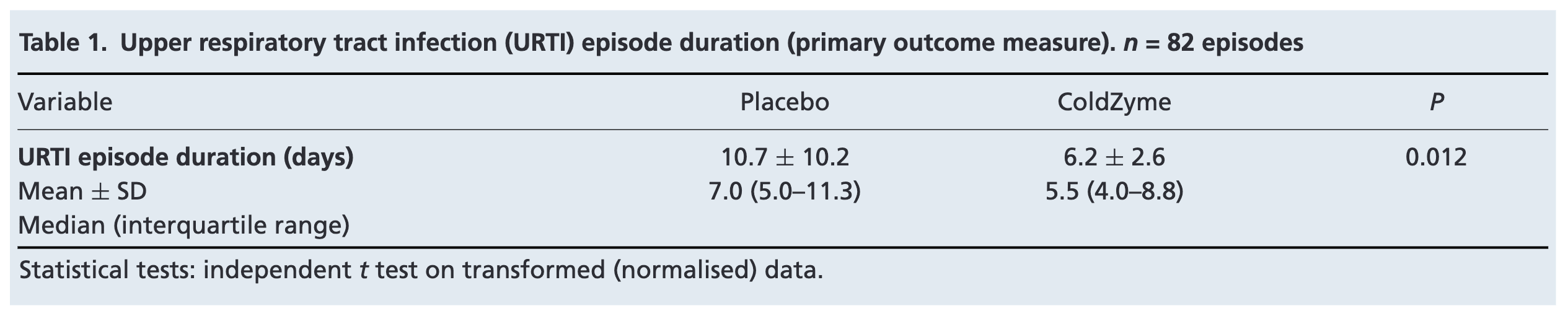
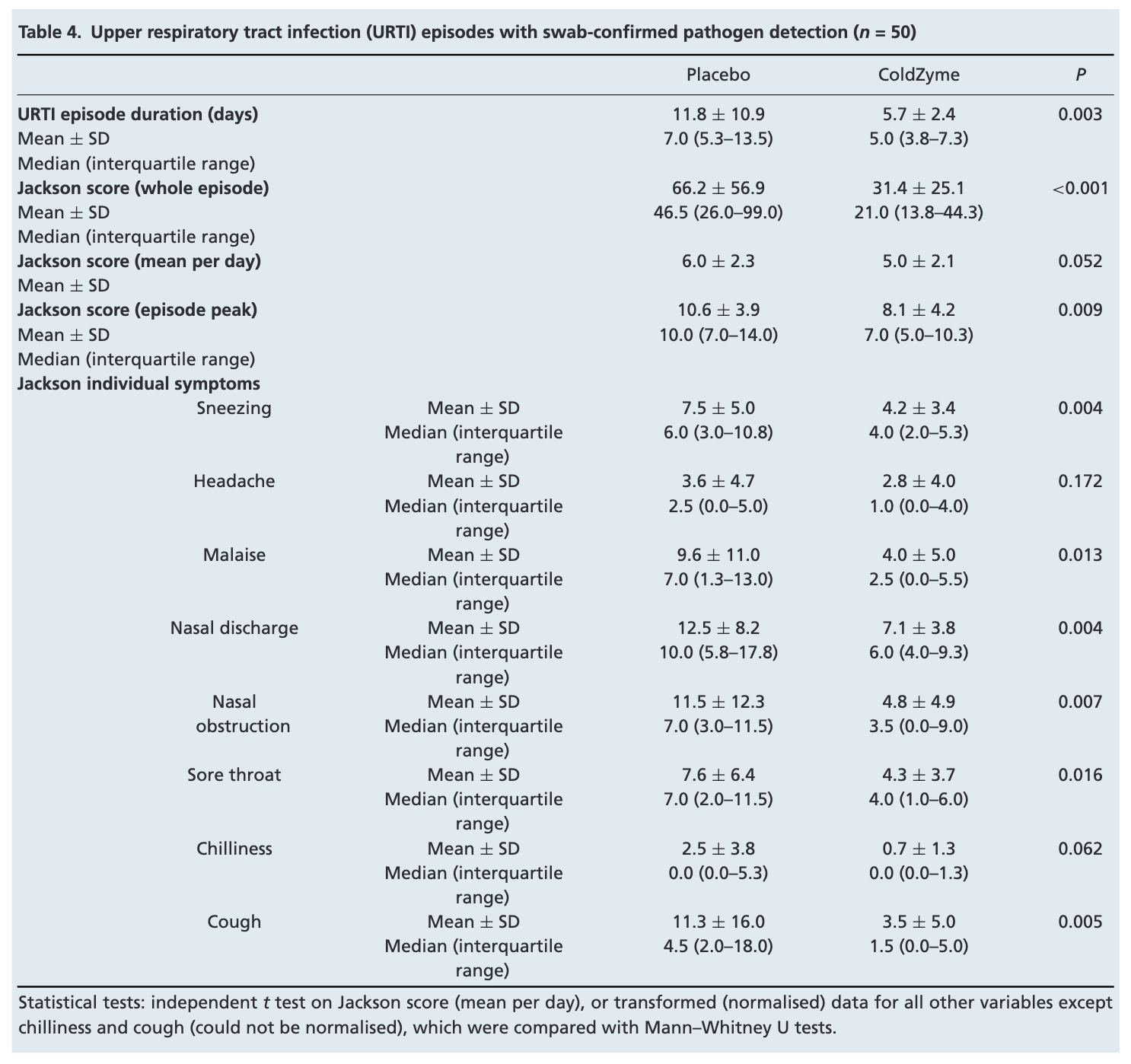
164 active athletes were randomized to use either ColdZyme or placebo at the first signs of upper respiratory tract infection. The final results are based on 154 participants. Athletes using ColdZyme had significantly shorter illness duration compared to the placebo group (mean 6.2 vs 10.7 days, median 5.5 vs 7.0 days, p=0.012). Among the 50 participants with swab-confirmed viral infection, the median duration was 5.0 days in the ColdZyme group vs 7.0 days in the placebo group. The ColdZyme group also had significantly fewer lost training days.

Milder symptoms during a cold

Participants rated 8 cold symptoms daily using the Jackson score. ColdZyme produced a statistically significant reduction in 6 of 8 symptoms compared to placebo, including nasal discharge (p=0.004), nasal obstruction (p=0.007), cough (p=0.005), sneezing (p=0.004), malaise (p=0.013) and sore throat (p=0.016).

Substantially reduced viral load

Among participants with swab-confirmed rhinovirus infection, the 7-day viral load (area under the curve) was 94% lower in the ColdZyme group compared to placebo (p=0.029).


Laboratory findings (in vitro)

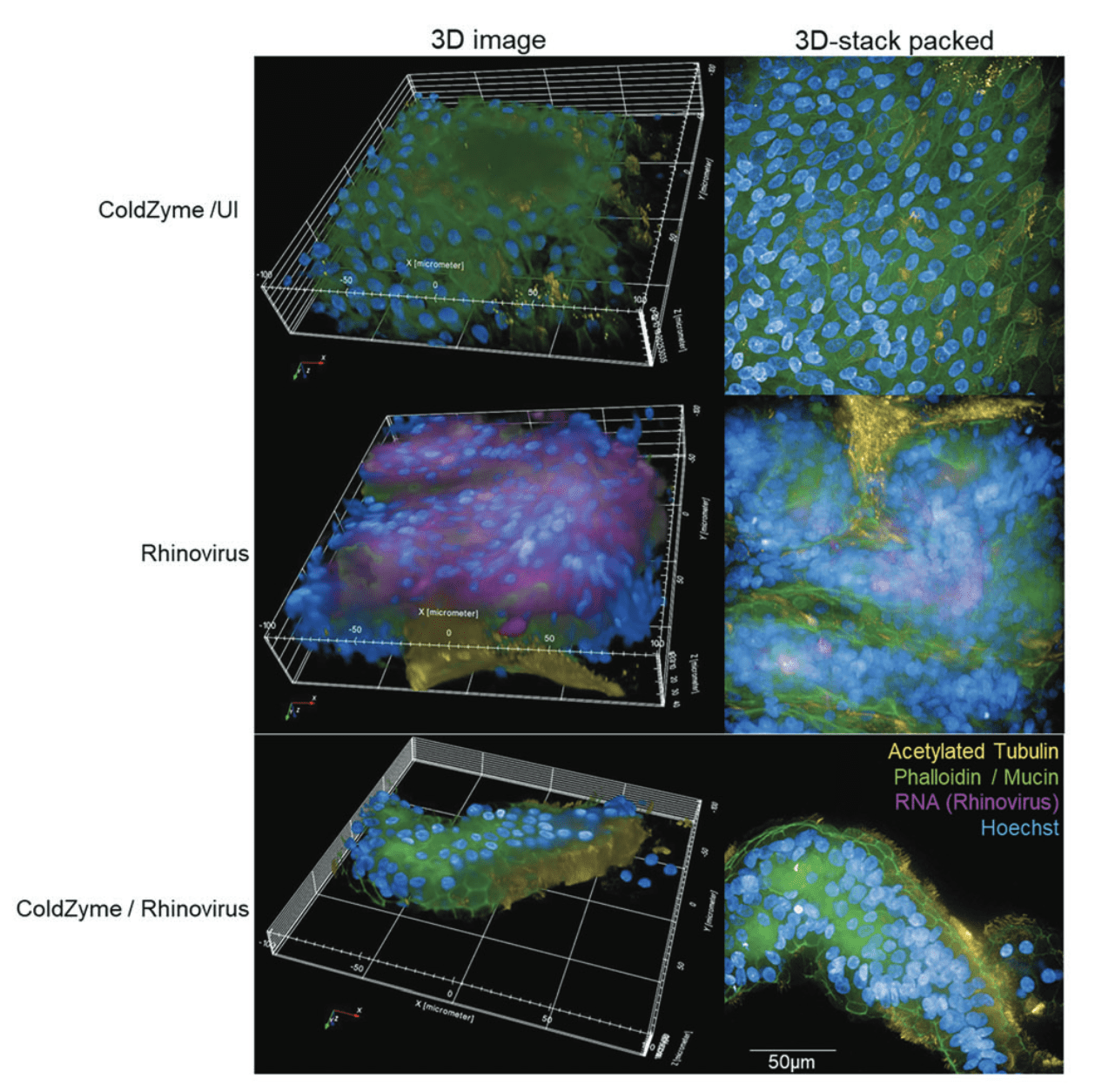
The in vitro study conducted by the research team in Vienna, used human airway epithelial cells in models representing the different parts of the upper airways (nose and throat) infected with rhinovirus. Cells treated with ColdZyme showed median viral load reductions of 80–100% (p<0.05).  Epithelial barrier integrity was maintained in ColdZyme-treated cells, while untreated cells showed significant damage. No virus was detected by immunofluorescence analysis in ColdZyme-treated tissue.


The images below show how the amount of virus (shown in pink) is substantially reduced in airway cells treated with ColdZyme before exposure to the virus, and that the cells remained undamaged.

  • Top image: tissue treated with ColdZyme only. No pink color.
  • Middle image: tissue exposed to rhinovirus showing large amount of virus. A lot of pink color.
  • Bottom image: tissue first treated with ColdZyme and then exposed to rhinovirus. No pink color.
Author:
Ewa Lundborg
Medical writer (freelance), registered pharmacist
Reviewer:
Ann-Christine Provoost
Regulatory Affairs Director, Enzymatica AB
Published date
20 May, 2026
Last updated
20 May, 2026

Läs mer om förkylning

Här hittar du expertråd, praktisk information och forskningsrön. Med våra artiklar får du värdefulla insikter om förkylning och tips på vad du själv kan göra i förkylningstider.

There is more than one kind of cold

What we generally call catching a cold is actually an umbrella term for a wide range of infections with the same characteristic symptoms such as a runny nose, nasal congestion, sore throat, cough and sometimes fever. In total, hundreds of different viruses can cause colds. This is why the common cold is not only the most frequent illness in humans, but also one of the more complex.

Enzymatica
Ideon Science Park
Scheelevägen 19 A
223 70 Lund Sverige
info@coldzyme.se

For ColdZyme Summary of Safety and Clinical Performance (SSCP), please contact us at info@coldzyme.se

Copyright © Enzymatica AB 2026
Approval ID: MKT-135SE-02